
Relocation Guide
Living in South Dakota
South Dakota appeals to buyers who want more room, lower pressure, no state individual income tax, and practical access to strong regional communities.
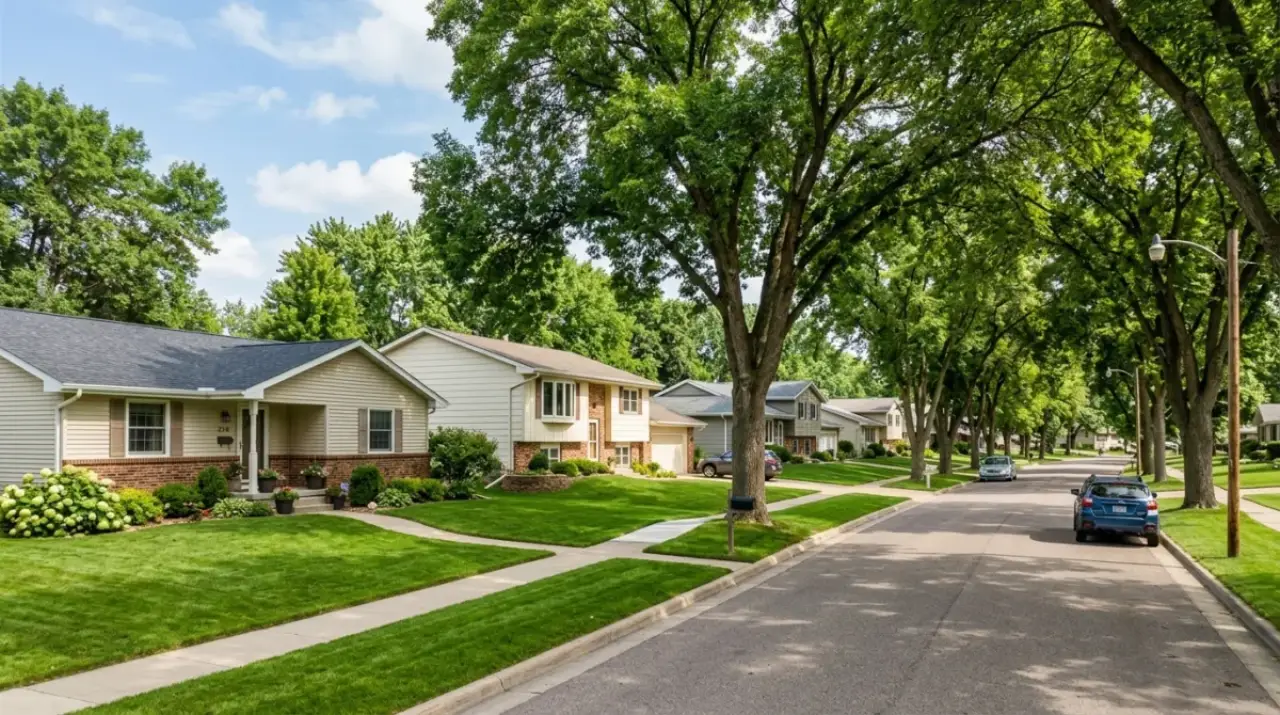
What South Dakota is actually like
South Dakota is a state of sharp contrasts. The east side is more humid, more agricultural, and more tied to Sioux Falls, river towns, and commuter patterns. The west side is drier, more scenic, and shaped by tourism, ranching, and the Black Hills. Day-to-day pace is slower than a big metro, but the social texture isn't empty - it's more local, more direct, and more relationship-based. Newcomers are usually surprised by how differently the state feels from one region to the next. Sioux Falls is the most urban and fastest-moving market, while smaller towns feel tightly connected around school, church, sports, and local employers. In many places, people still know their neighbors. That can be a real plus if you like community, and a downside if you want anonymity.
Cost of living
South Dakota usually lands below the U.S. average on overall price levels - BEA Regional Price Parities are indexed to 100 and South Dakota has recently been below that benchmark. Housing is the biggest driver of affordability in most conversations. In southeast South Dakota, housing is more accessible than many high-cost coastal markets, though fast-growing neighborhoods and new construction can change that quickly. Groceries, utilities, and gas usually feel manageable, but the actual monthly budget depends on home size, winter heating, and commute length.
The tax picture
South Dakota has no state individual income tax. State sales tax is 4.2%, with municipal sales tax adding another layer depending on where you live or shop. Motor vehicle excise tax applies on most vehicle purchases, so new residents budget for that separately from house costs. Property tax varies the most by county, township, and school district. That means two buyers with the same income can have very different monthly carrying costs depending on whether they buy in Sioux Falls, a river town, or a rural acreage. The real answer isn't 'South Dakota is cheap' or 'expensive' - it's 'it depends on the home, the town, and the tax district.'
Healthcare access
Healthcare is one of the strongest practical advantages of southeast South Dakota. Sanford and Avera dominate the region, especially in Sioux Falls where they anchor most specialist care, hospital access, and employer demand. That matters for families, retirees, and anyone who wants a broad healthcare network without driving out of state. Western South Dakota leans more heavily on Monument Health - which makes Rapid City the key medical hub on that side. Outside Sioux Falls and Rapid City, access can still be good, but it's more regional and may require longer drives for specialty care.
Outdoor life
Outdoor recreation is a real part of South Dakota life, not just a tourism slogan. State parks, the Missouri River, lakes, and public hunting land give residents weekend options without leaving the state. Pheasant hunting is especially important culturally and economically in fall and shapes both recreation and rural life in many counties. In southeast South Dakota, the Missouri River matters. It creates fishing, boating, and bluff-country views, and it helps define the character of towns like Vermillion and Yankton. In the west, the Black Hills and state parks dominate the recreation conversation. 'South Dakota lifestyle' means very different things depending on where you settle.
Weather reality
South Dakota weather is less about averages and more about swings. Summers can be hot and humid in the east, but generally less sticky than parts of the lower Midwest. Winter turns quickly from manageable to severe. The east is more humid; the west is drier. Winter temperatures drop well below freezing and bring road-condition problems. Blizzards are part of life here, especially in the colder months, and first-time residents should expect wind to matter as much as temperature. If you're moving from a warmer state, the bigger adjustment is often not the cold itself but how cold, wind, and road conditions stack together. Four-wheel drive helps, but good tires and winter driving habits matter just as much.
Culture and fit
South Dakota's culture is generally more small-town, practical, and less performative than many newcomers expect. Religious life still matters in a lot of communities, though the state isn't uniform and bigger cities are more mixed. Politically, the state leans conservative, but there's variation by region and town - especially between Sioux Falls, college towns, and rural counties. The social norm is straightforward communication and local loyalty. People care about school sports, church communities, local businesses, and whether you show up and participate. That can feel warm and welcoming if you like directness, or closed if you expect a more anonymous, fast-turnover social environment.
Compare the options
| Community | Best fit | What to compare |
|---|---|---|
| Sioux Falls | Jobs, healthcare, city amenities | Neighborhoods, traffic, price points |
| Vermillion | University-town living | Rental demand, historic homes, commute routes |
| Yankton | River, lake, small-city pace | Lake proximity, established neighborhoods, lifestyle |
| Tea | Sioux Falls-area growth | Newer homes, schools, commute |
Related South Dakota guides
Frequently asked questions
Is South Dakota a good state to move to?
For many people, yes - especially if you want no state income tax, lower overall cost than coastal states, and a more grounded pace of life. Trade-offs include winter weather and longer drives for specialty services outside the largest cities.
What is the downside of living in South Dakota?
Biggest downsides: winter weather, wind, and the fact that some specialty care and services require driving outside the largest cities. If you want dense urban amenities or a mild climate, South Dakota will feel limiting.
Is South Dakota affordable to live in?
Usually, yes - compared with the national average. BEA Regional Price Parity data and the state's tax structure both point to a state that can be cost-friendly, especially if you avoid overbuying on house size.
Is South Dakota safe?
Safety depends on the city and neighborhood. Most southeast SD towns post below-average violent crime rates. For relocating buyers the better question is which town and which part of town fits their comfort level.
Do you need 4WD in South Dakota?
Not strictly required, but helpful - especially outside the biggest cities or on rural roads. Winter driving conditions (not just snow totals) are what usually push people toward AWD or 4WD.
What is the most diverse city in South Dakota?
Sioux Falls is the most diverse and most cosmopolitan city in the state - largest metro, broadest mix of jobs, schools, and newcomers. Smaller towns are less diverse simply because they're smaller and more locally rooted.