
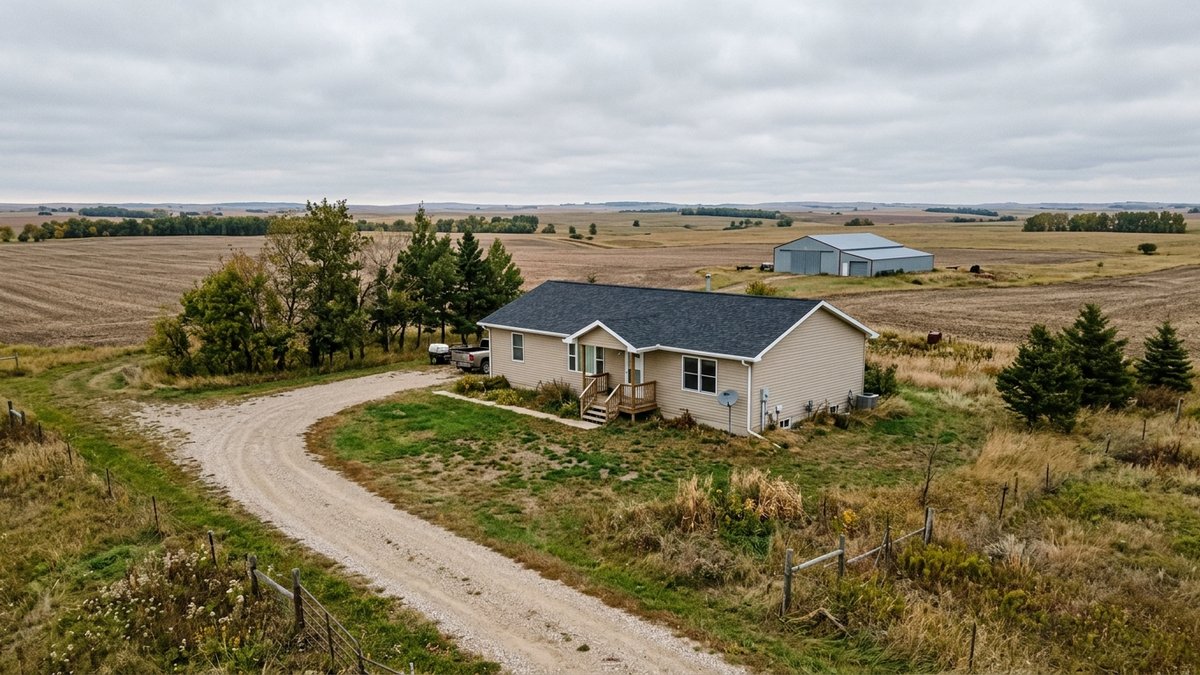
Seven things to know before moving to southeast South Dakota
You'll feel the wind every day. Southeast South Dakota is flat and open - wind shows up even in summer, on the front steps of a Vermillion bungalow, on the banks of the Big Sioux, and on the drive between Sioux Falls and Yankton.
You live in two seasons: road-season and winter. Summers are green and humid; winter is the real planner. Blizzards, black ice, and snow-day-forever stretches are part of the local calendar, not an anomaly.
No state income tax is real but not magic. South Dakota doesn't tax individual income, but you still pay sales tax, property tax, vehicle excise, and federal tax. Budget like you're paying higher sales and property rates instead of a state withholding line on your paycheck.
It's a Sanford vs. Avera world. From Sioux Falls to Elk Point, you'll almost always choose between Sanford- or Avera-affiliated clinics and hospitals for most care. Ask which network your insurance prefers before you pick a primary care doctor.
Basements are standard almost everywhere. Ranches, split-levels, and cookie-cutter subdivisions almost all have full basements built to or below the frost line. If you're coming from a place where basements are rare, that's a shift - you'll suddenly care about sump pumps, radon, and basement finish quality.
Rural usually means well and septic. East of the James River, many acreages and small-town lots run on private wells and septic systems. That's normal - it just means budgeting for pump-outs, well testing, and inspections.
The internet and cell picture gets patchy fast. Sioux Falls, Tea, Yankton, and Vermillion have fiber and strong 5G. Out toward Elk Point, Beresford, and rural acreages, speeds drop and you may rely on fixed-wireless, satellite, or LTE home internet. Ask your agent for the actual ISP and tower map, not just "we have internet."
How South Dakota residency actually works
South Dakota doesn't have a long domicile clock. For full-time relocators and the well-known RV crowd, the rule is effectively: spend one night in state, get a South Dakota driver's license, and establish a South Dakota address.
The SD Department of Revenue gives new residents 90 days from arrival to title and license an out-of-state vehicle. Vehicle excise is 4% of the purchase price at registration, in place of a traditional sales tax on vehicles. For voter registration, the state uses a 30-day residency standard and requires registration with the county auditor at least 15 days before any election.
The Sanford vs. Avera healthcare network
Sanford Health runs the big hospital campus in Sioux Falls (Sanford USD Medical Center) and clinics in Yankton, Vermillion, and most smaller towns. It's especially strong on Sioux Falls specialties and pediatric tie-ins.
Avera Health is also based in Sioux Falls and extends through rural South Dakota, Minnesota, Iowa, and Nebraska. Avera Sacred Heart in Yankton and Avera clinics across the region feed into the Sioux Falls hub. For new residents, the first question is usually which network your insurance prefers - co-pays can differ sharply between the two.
What winter actually looks like here
Cold season runs November through March, and snow stays on the ground longer than newcomers expect. The Sioux Falls average January low sits around 17–18°F, with roughly 25 days a year below zero. Annual snowfall averages about 45 inches, usually in modest but frequent storms.
The mix of river valleys (Big Sioux, James, Missouri) and flat farmland produces sudden black ice, fog, and patchy slick days even when the sky looks clear. Snow pack hangs around for weeks, especially between Sioux Falls and the Iowa border. School and work closures are common when blowing snow and low visibility hit the river valleys. Plan on winter tires, an emergency kit in the car, and the expectation that some commutes simply don't happen on the worst days.
The tax picture beyond no state income tax
South Dakota's state sales tax is 4.2% through a 2023–2027 reduction. Local jurisdictions add their own sales tax on top, so combined rates in Sioux Falls, Yankton, and Vermillion typically run 6.0–6.3%.
Property tax effective rates statewide land around 1.0–1.1% of assessed value, with median bills near $1,700–$1,800 a year. In Lincoln County (south of Sioux Falls) effective rates run higher - often 1.5–1.7% - because of school and local-government levies. Vehicle excise is 4% on most vehicles at registration. Net result: no state withholding line on your paycheck, but more at the register and the county auditor's office than in a high-income-tax, low-sales-tax state.
What surprises out-of-state buyers
Basements aren't a luxury, they're the default. Rural usually means well and septic. There's no state withholding line on the payslip (federal income tax, FICA, and any local taxes still apply). And "close" still means driving - Sioux Falls to Yankton is about 70 miles, Vermillion to Elk Point is 30–40 minutes on back roads. You'll lean on cars more than in a dense metro.
Internet and cell by town
Sioux Falls and Tea: multiple ISPs including fiber, cable, and fixed-wireless, with frequent triple-digit Mbps options. Major carriers have solid 4G/5G across the metro.
Yankton and Vermillion: wired providers plus decent fixed-wireless. Rural outlying acreages often fall back to slower DSL or radio-based service. Cell coverage along the Missouri River corridor is usually solid, but back-road bluffs and valleys cause drop-outs.
Beresford, Elk Point, and small-town corridors: strong in town, weaker on surrounding farmland. Rural acreages and gravel-road properties often rely on fixed-wireless, satellite, or LTE home internet, which costs more for less speed. If you're shopping rural, get the closest tower and ISP map before the offer.
Frequently asked questions
Is moving to South Dakota worth it?
For many families and remote workers, yes. No state income tax and generally lower housing costs make take-home pay go further than in many Sun Belt or coastal states. You trade that for harsh winters, longer drives, and patchy rural infrastructure.
What's the best part of South Dakota to move to?
There's no single best part. Southeast South Dakota - Sioux Falls, Vermillion, Yankton, Tea, Elk Point, Beresford - has the strongest job market and the easiest access to hospitals and schools. The Black Hills and Rapid City offer drier weather and tourism, but more expensive housing and longer commutes.
Is South Dakota a tax haven?
South Dakota is a tax-advantaged state, not a tax-free paradise. No individual or corporate income tax and favorable trust laws make it attractive for high-net-worth and remote-worker households, but the state leans on sales, property, and local taxes - so total burden isn't zero.
Do I need 4WD in South Dakota?
Not legally, but AWD or 4WD with winter tires is strongly recommended for winter driving. In southeast SD, you'll often drive county and river-bottom roads where plows can't get there immediately. A FWD sedan on worn all-seasons can get stranded fast.
Is internet good in rural South Dakota?
Depends on the specific acreage or town. Sioux Falls, Tea, Yankton, and Vermillion have multiple wired-broadband options. Rural areas may be limited to fixed-wireless, DSL, or satellite, with lower speeds and higher latency.
How do South Dakotans feel about transplants?
Most people are polite but not naïve about newcomers. Southeast SD communities value showing up more than talk - volunteering, school groups, local events. Come in respectful, willing to drive, and open to cold-weather life and you'll blend in faster than in a more transient state.
Sources SD Department of Revenue · SD Sales & Use Tax · Lincoln County Motor Vehicles · NWS Sioux Falls climate · Avera Health network
Related South Dakota resources

Work with Michelle Maloney
Bring Michelle the town, property type, timeline, and the decision you are stuck on. She will help you compare Sioux Falls, Vermillion, Yankton, Tea, Beresford, Elk Point, and the Sioux City corridor against the way you actually need to live or sell.