
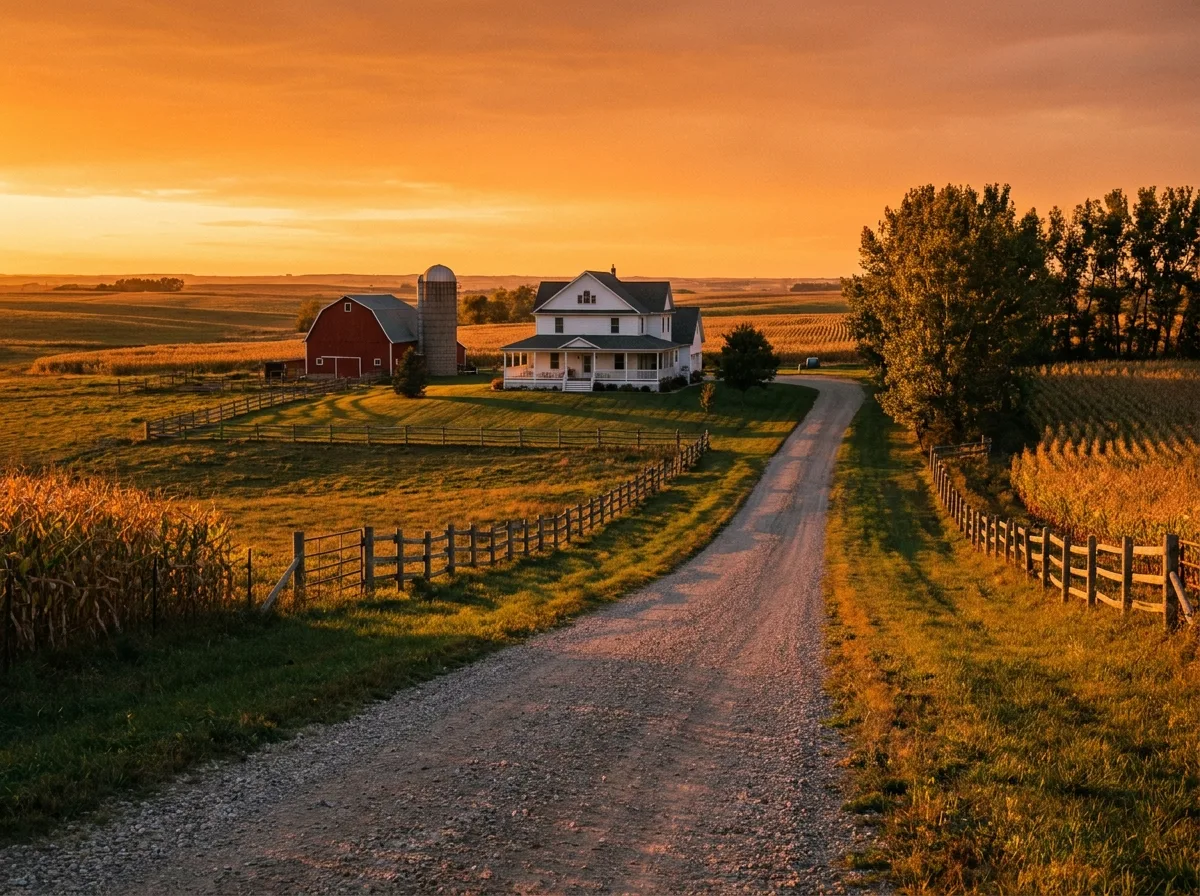
What counts as an acreage in southeast SD
In southeast South Dakota, an 'acreage' usually means anywhere from 5 to 40 acres with a house, well, septic, and at least one outbuilding - a shop, garage, or barn. Not pure farmland; a residential property with meaningful land that sits outside the main town grids.
These properties are often on section-line gravel roads, sometimes a few miles from town, and they usually have rural fire protection rather than city fire service. That's why they're called 'acreages' instead of just 'lots.' An acreage is a house with real land, rural utilities, and a more hands-on lifestyle than a city home.
Well water
You're very likely on a private well, not city water. South Dakota has no permit requirement for ordinary domestic wells, but you still need a licensed water well driller for drilling work - the state recommends verifying the driller's license through DANR.
Well depth in southeast SD depends on the aquifer and geology. The state's Water Rights Program maintains roughly 1,600 observation wells, with depths ranging from shallow to very deep depending on location.
Test water quality before you close - especially for bacteria and nitrates. The state's Drinking Water Program publishes testing guidance. Ask for the well completion report and verify it through the state database. On an acreage your water is your responsibility - test it before you buy and keep the records.
Septic systems
You're also on a private septic system, not city sewer. South Dakota has a certification program for septic tank system installers - only state-certified persons may install, repair, or upgrade individual on-site wastewater systems.
The minimum lot size for a septic system is one acre, with required distances between the septic tank, well, property lines, and absorption field. That's why a proper site evaluation matters at purchase.
Many buyers request a septic inspection at sale, especially if the system is older or the property is being used as a rental. If the system fails inspection, repairs can be expensive and may require a permit from the county planning department. Get it inspected; understand age and capacity before you sign.
Financing - USDA, conventional, and outbuildings
You can absolutely get a mortgage on a property with a well and septic, but the financing options depend on property classification and your income. USDA Rural Development loans are designed for rural areas and can help low- and very-low-income households buy homes in eligible rural areas, sometimes with no down payment.
Conventional loans are also common for acreages, especially if the property has a house, a shop, or other outbuildings. The key issue is appraisal - appraisers treat outbuildings differently depending on quality, size, and how they compare to other properties in the area. Some outbuildings tied to active commercial-ag use can disqualify USDA financing.
USDA loans work well for rural residential properties; conventional loans are often more flexible when you have shops and outbuildings that don't fit the strict rural-residential mold.
Internet and cell coverage
Internet and cell coverage are the next major reality check. Rural southeast SD isn't uniformly covered by fiber or fast cable, so you need to check what's actually available at the address.
Midco is the most widely available major provider in South Dakota. Vast Broadband and Midcontinent are common in specific areas. Starlink and T-Mobile Home Internet are real options where wired service is weak, but you should check availability and speed at the exact property - not the ZIP code - before you buy.
Don't assume you have good internet. Test fiber, fixed wireless, Starlink, and T-Mobile at the actual address before the offer goes in.
Road access
Most acreages in southeast SD are on section-line gravel roads maintained by the township or county - not by the city. Snow removal is usually slower than in town, and you need to be comfortable with gravel driving, maintenance, and winter conditions.
Road conditions affect insurance, commute time, and daily quality of life. A property 5 miles from town can feel a lot farther after a big snowstorm. Gravel roads, snow, and distance all matter more than the map suggests.
Zoning and ag preservation
Zoning is usually county-based, not city-based - and ag preservation rules can apply. South Dakota has agricultural tax programs that reduce property taxes for bona fide agricultural use, and 'agricultural purposes' is defined in state law.
Check county zoning ordinances if you want to subdivide, add structures, or keep animals. Some counties have minimum acreage requirements; some have ag preservation overlays that can affect what you do with the land. County zoning and ag rules matter more than city zoning - check the county before you buy.
Insurance
Rural insurance is different from city insurance - especially on fire response distance and outbuilding coverage. Fire protection classes range from 1 to 10. If your home isn't within 5 miles of a responding fire department, it's usually assigned protection class 10, which can raise premiums materially.
Outbuildings - shops, barns, garages - need to be covered separately or as part of the policy, and you should make sure they're listed and valued correctly. Shop, barn, and distance from the fire station all affect your premium. Get quotes before you close - don't assume an in-town policy carries over.
Frequently asked questions
How much does an acreage cost in southeast South Dakota?
Depends on the land, house, and outbuildings. The statewide average for non-irrigated cropland sits around $6,189 per acre in 2025; pasture around $1,720 per acre. A house with 5–40 acres will usually cost more than the raw land alone.
Can I get a mortgage on a property with a well and septic?
Yes. USDA Rural Development loans and conventional loans both work on rural properties with well and septic, as long as the property meets program requirements.
How often should a well be tested?
Test before you buy, and annually for bacteria and nitrates after that. Many buyers also test for chemicals if the area has heavy farming or known contamination history.
What's a USDA loan and do I qualify in SD?
USDA Rural Development loans are for rural areas and help low- and very-low-income households buy homes - sometimes with no down payment and possible payment assistance. You must meet income limits and the property must be in an eligible rural area.
Do I need a tractor to live on an acreage?
Not legally - but if you have a long gravel driveway, a lot of land, or animals, a tractor or similar equipment is practically essential for snow, maintenance, and yard work.
What's the property tax difference between in-town and acreage in SD?
Acreages can qualify for agricultural tax treatment if they meet acreage and income requirements, which can lower taxes compared with a standard residential parcel. In-town homes are usually taxed as residential without ag benefits.
Can I subdivide an acreage in South Dakota?
Depends on county zoning and minimum acreage rules. Some counties require 20 acres or more to subdivide; some have ag preservation overlays. Check the county's specific ordinance before assuming you can split it.
Sources SD DANR - Well Completion Reports · SD DANR - Septic System Installers · USDA Rural Development - SD Single Family Housing · SD Department of Revenue - Agricultural Property Tax · SDCL 10-6-112 - Agricultural land · SD Counties - On-site wastewater requirements
Related South Dakota resources

Work with Michelle Maloney
Bring Michelle the town, property type, timeline, and the decision you are stuck on. She will help you compare Sioux Falls, Vermillion, Yankton, Tea, Beresford, Elk Point, and the Sioux City corridor against the way you actually need to live or sell.