
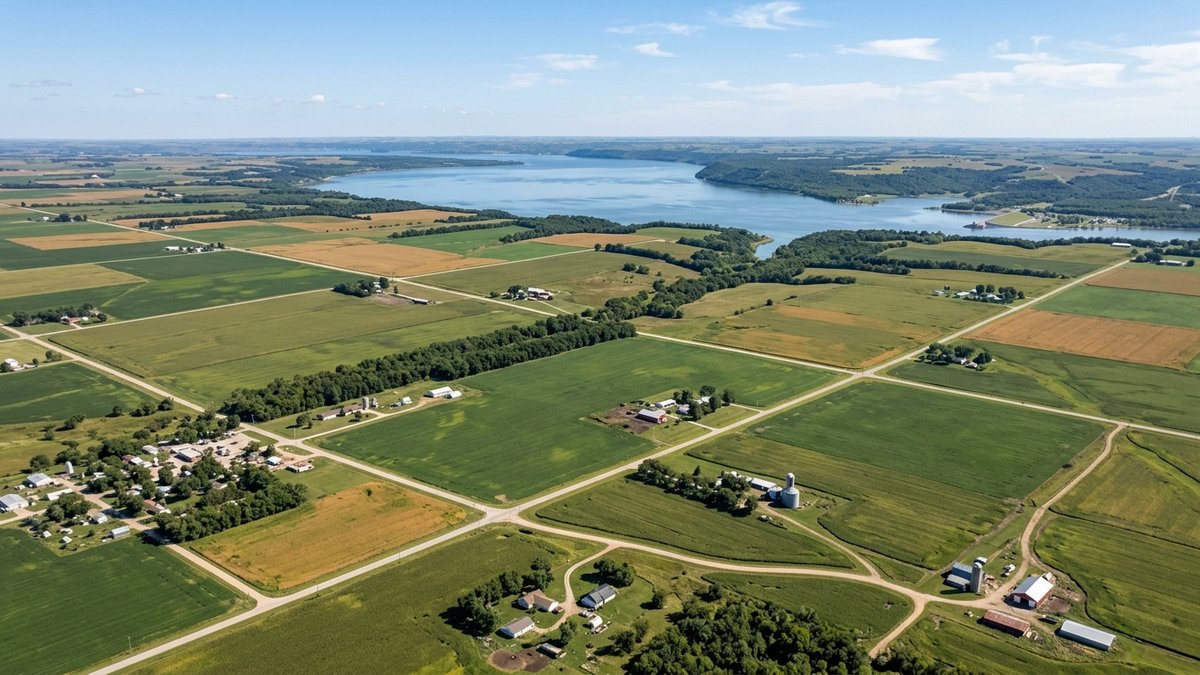
What matters most at the actual house?
Start at the property, not with a circle drawn around the grain elevator on a map. Stand where you would spend time outdoors, then listen and look from inside the house with the windows in their usual positions. Note the direction of the facility from the house, the position of the driveway, and whether a likely truck approach passes the front of the property. A nearby operation on another route may present a different daily experience from one whose entrance is across your driveway. Distance alone cannot settle that question.
Follow the drive you would actually take to work, errands, or town. Does the route cross the facility’s truck entrance or a rail crossing? Are there places where turning visibility, a narrow road, or a line of waiting vehicles could matter to your routine? A map can identify possible connections, but it cannot tell you how the road feels from the driver’s seat or how often a queue forms. Record what you observed, the time of the visit, and what you could not see.
A South Dakota acreage buying guide can help you organize the broader property review. Keep this elevator question separate from well, septic, boundaries, and buildings. The useful choice here is whether the specific neighboring activity and route fit how you expect to use this home.
When should you visit to judge activity, noise, and dust?
Make more than one visit if the buying timeline allows. A weekday visit while the facility is operating can show something a quiet weekend tour cannot. An evening visit may answer a different question about your usual hours at home. If your decision depends heavily on seasonal activity, ask about it before assuming the day you toured represents the busiest period. You may not be able to observe every season before an offer, so mark that limitation honestly.
At each visit, use the same observation points: driveway, porch or yard, primary living space, and the road you expect to use. Note visible dust, truck movement, idling or waiting, and sounds you can hear from the house. Wind, weather, facility operations, and road conditions can differ between visits. One calm afternoon does not prove a quiet year. One busy hour does not prove the same conditions every day. If a concern appears, return at another time rather than replacing an observation with a guess about how often it happens.
The USDA’s South Dakota crop progress reports can give broad harvest-season context, but a statewide report is not the schedule for this elevator. Ask the operator about typical receiving hours and seasonal changes. Treat the answer as information from the operator, and compare it with what you see. A buyer who needs a reliably quiet outdoor space may weigh an unresolved activity question differently from a buyer who is comfortable with nearby working land. Neither preference needs a statewide rule.
How do truck routes and rural road access affect the decision?
Trace the likely truck path separately from your household route. Ask the elevator which approaches drivers commonly use, whether trucks queue on site or along a public road, and whether rail service is part of the operation. Then confirm who maintains each road you would rely on. In rural South Dakota, the relevant authority may be the state, a county, or a township. The right office depends on the particular road, so do not assume a state map answers a local maintenance question.
The South Dakota Department of Transportation publishes traffic and truck-count data, including information for roads outside the state trunk network. Those counts help describe the road and the period measured. They do not identify every vehicle’s destination, establish today’s grain deliveries, or tell you whether trucks pass a particular driveway during your commute. Check the count date and the road segment before treating any figure as relevant. Ask the applicable road authority about maintenance and current conditions on the actual approach.
South Dakota Truck Information also documents special restrictions on some roads and bridges. A restriction on one route does not tell you which alternate route a driver uses. Verify any route-specific question with the road authority and the operator. If access itself is a concern, the site’s private-road access guide covers a different but related ownership check. For this decision, keep the focus on the road serving this address and the facility traffic you can document.
What can air-permit records tell you about a nearby elevator?
South Dakota’s Department of Agriculture and Natural Resources lists grain elevators among its air-permit categories and offers a regulated-facility lookup. Identify the actual operation first, then ask the department how to find available permit and inspection records for that facility. A category page tells you the state has a process for facilities of that type. It does not establish that the elevator you can see has a particular permit, that a given control is working today, or what the air is like on the property you are considering.
Keep facility equipment and road dust as separate questions. DANR explains that gravel-road dust is not regulated under state or federal air rules and directs people toward local government for local controls. If the approach road is gravel, ask the county or township about its surface, maintenance, and any local dust practices. Looking only at an elevator permit could miss a road concern, while blaming every dusty visit on the elevator could be equally misleading. Note where dust appears, the road surface, and the weather when you see it.
Do not turn a permit lookup into a health conclusion or a property-level exposure claim. The record can clarify what is documented about a facility and suggest better follow-up questions. It cannot measure what you personally encountered at this house. If a specific air-quality concern could change your decision, identify the concern and seek an appropriate qualified source rather than guessing from distance, appearance, or a single visit.
Which questions should go to the operator and local road authority?
Ask the operator about the parts of the operation that could intersect with this address: usual receiving hours, seasonal variation, truck entrances, possible queuing, and whether rail activity occurs. Ask whether any answer depends on the crop year or can change. You are seeking a practical description, not a promise that every future day will match it. If you cannot reach the operator, leave the question open in your comparison instead of filling it with an assumption.
For the public road, identify its jurisdiction before asking who maintains it. Give the authority the road name or segment and ask about the surface, maintenance responsibility, known restrictions, and how to verify current conditions. A county answer about a county road may not cover a township segment farther along your route. If the driveway connects to a private road, determine who has access and maintenance responsibility as a separate property matter. Your agent can help you organize those questions, while the appropriate authority or qualified professional should answer technical and legal ones.
This is also a useful time to compare the house with other South Dakota acreage options. An elevator-adjacent property may still suit a buyer who likes the house and is comfortable with observed operations. Another buyer may need more certainty about truck traffic or outdoor quiet. Keep the comparison tied to the particular properties and routes, not a blanket judgment about agricultural neighbors.
How do you make a decision when some conditions remain unknown?
Build a simple property-specific grid before deciding. Use rows for house-to-facility orientation, driveway and truck-route overlap, weekday and evening observations, seasonal activity, dust and noise at the house, road surface and maintenance authority, a rail crossing if present, operator answers, permit records, and the coverage date of any traffic count. Add a column for what you observed, a column for what a document shows, a column for what someone reported, and a final column for what remains unknown. Keeping those categories apart prevents a general map or a verbal answer from masquerading as a firsthand property observation.
Review the grid against your own use of the home. Which unanswered question could change your decision? Can you make another visit, request a document, or speak with the responsible office while the purchase timeline still allows it? If you are considering inspection or other contract terms, discuss the available options with your real estate professional and the appropriate legal or technical adviser. Do not assume a standard contingency answers an off-site activity question.
The same discipline applies to rural road access in winter, though the elevator adds a distinct operating-neighbor question. If you are weighing a particular rural South Dakota home, contact Michelle Maloney to compare the property and route with other acreage choices. Bring your observations and unanswered questions so the next visit or records request has a clear purpose.
Frequently asked questions
Does a nearby grain elevator automatically make a rural South Dakota home a poor choice?
No. Compare the actual house, driveway, route, and observed activity with your own needs. Distance by itself does not establish noise, dust, traffic, or fit.
Can state traffic counts tell me how many trucks visit the elevator?
No. SDDOT counts describe a road segment and measurement period, not the destination or current delivery schedule of each vehicle. Check the date and segment, then ask the operator and road authority about the specific route.
Will an air permit tell me how dusty the house is?
No. A facility record is not a measurement at the house. Observe the property at different times and separate questions about facility operations from questions about gravel-road dust.
Who can answer questions about the road near the property?
Identify whether each segment is maintained by the state, county, township, or a private party. Ask the responsible authority about current maintenance and route-specific restrictions.
SourcesSouth Dakota DANR Air Quality Permitting · South Dakota DANR Air Quality Program · South Dakota DOT Traffic Data · South Dakota Truck Information: Routes with Special Restrictions · USDA NASS South Dakota Crop Progress and Condition
Related South Dakota resources

Work with Michelle Maloney
Bring Michelle the town, property type, timeline, and the decision you are stuck on. She will help you compare Sioux Falls, Vermillion, Yankton, Tea, Beresford, Elk Point, and the Sioux City corridor against the way you actually need to live or sell.