
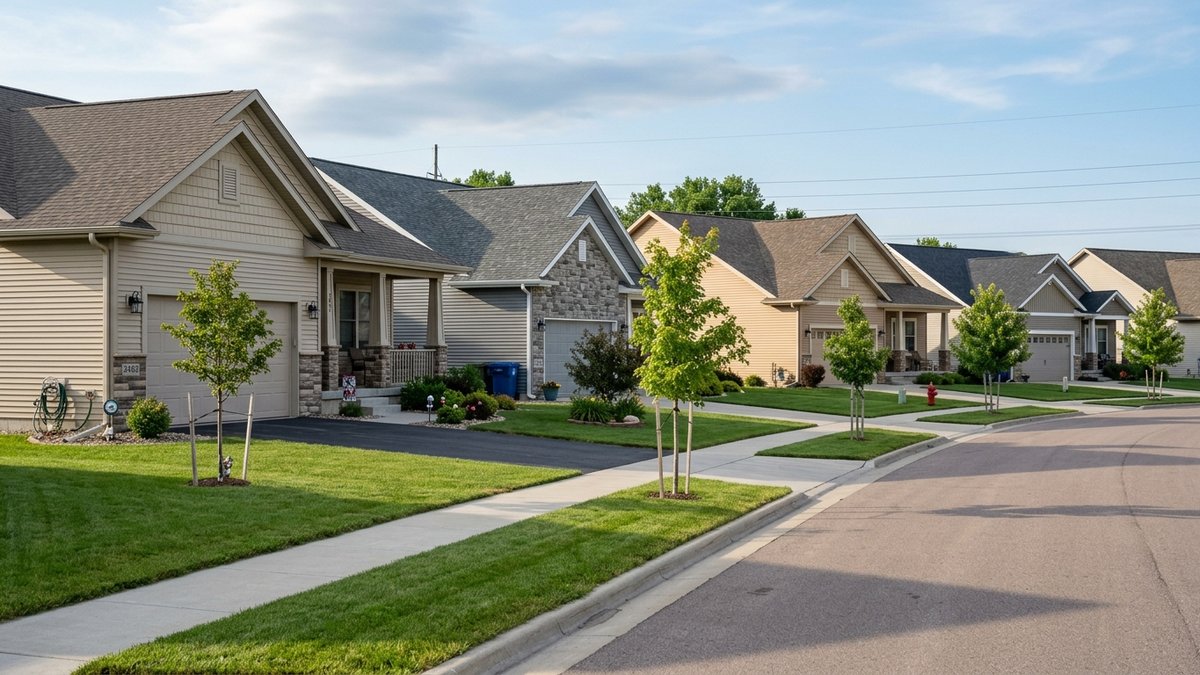
Is a Sioux Falls new build worth the extra money?
It can be, but only after the buyer compares the finished price and ownership plan with a real resale option. The number on a builder’s sign may not include the lot, selected finishes, landscaping, appliances, window coverings, fencing, irrigation, or items that a resale house already has. A resale price may also hide an older roof, dated mechanical equipment, or renovation work. Both sides need a full list.
Start with two addresses or two well-defined options. For the new home, ask for the lot premium, design selections, standard features, allowances, and every charge that can change before closing. For the resale home, list likely repairs, immediate updates, and items you would add after moving in. Mark each line as included, quoted, estimated, or unknown.
Sioux Falls had 5,615 permits and $1.327 billion in total construction valuation in 2025, according to the city. Its release also said single-family activity slowed while multifamily and townhome work remained steady. That is helpful context for supply, but it does not tell you what a specific builder will charge or concede.
The useful question is not whether new homes are always more expensive. It is whether this new home, at its finished price, gives you enough value over this resale home to justify the difference. The Sioux Falls community guide can help keep the location part of that comparison visible.
What should be included in the new-build price?
Ask for the complete specification sheet before treating a base price as a budget. A good comparison separates the home’s base contract from the lot, structural choices, interior selections, appliance package, exterior work, utility setup, association charges, and anything a buyer must finish after closing. If an allowance is listed, ask what it covers and what happens if the selected item costs more.
Lot choice can change more than a view. It may affect yard size, backyard exposure, grading, retaining work, driveway shape, and whether the builder includes fencing or landscaping. A smaller premium can still lead to a larger move-in cost if the lot needs work that another option includes. Ask for the plat, site plan, and any available drainage or easement information.
Builder incentives deserve the same discipline. A rate buydown, closing-cost contribution, or upgrade credit may be valuable, but compare the terms with your lender and the rest of the contract. A credit is not a universal saving. It may be tied to a particular lender, deadline, product, or price.
Use the South Dakota moving-cost guide to keep closing and arrival expenses separate from the house price. That keeps a buyer from treating a design-center choice and a moving-truck bill as if they were the same kind of cost.
If a material item remains unknown, write it down as unknown. A spreadsheet that leaves out irrigation, appliances, blinds, or yard work can make a new build look more certain than it is.
How do timing and location change the decision?
A completed new home and a home still under construction are different purchases. Ask for the anticipated completion window, the builder’s process for delays, the point at which selections become fixed, and the timing of the final walkthrough. Then compare that schedule with lease end dates, school or work transitions, financing commitments, and the cost of temporary housing if the home is not ready.
Check the address in the City’s building permit database. It can show permit records, the contractor, and a description of permitted work. That is not a substitute for reading the contract or inspecting the finished house, but it gives a buyer an official place to verify address-level activity.
The location also affects daily ownership. Two new homes can sit in different utility service areas, have different association rules, or create different drives to work and errands. A buyer considering Sioux Falls and a nearby community should compare the actual provider, local services, road access, and commute. A subdivision name is not enough.
Sioux Falls publishes current building permit and plan-review information because code compliance applies to structural, plumbing, mechanical, and electrical work. Use city records as one part of your file. Then ask the builder what documents will be available at closing, including permits, manuals, warranties, and service contacts.
The moving to South Dakota guide can help organize move dates around the house timeline. Give yourself room for a delay instead of assuming the completion month is a guaranteed move-in day.
What will the tax and utility budget look like?
A new home does not create one standard monthly cost. Property tax questions belong with the county’s assessment and tax offices. The South Dakota Department of Revenue directs owners to the county Director of Equalization for assessment questions and the county treasurer for tax-bill questions. Ask how the parcel is currently assessed, what information is available for the completed home, and when the new assessment may affect the bill.
For a Sioux Falls address served by city utilities, use the published 2026 rate schedule rather than an estimate copied from another subdivision. The city lists a new-account fee, fixed water charges based on meter size, volume water rates, and residential sewer charges. Inside-city and outside-city residential water rates differ, so the address and provider matter.
The city also has scheduled 2026 water and wastewater rate adjustments. That does not prove a particular new home will have a low bill. Household use, irrigation, meter size, occupancy, and the provider affect the result. Ask for the exact utility arrangement and build the budget from the published schedule and a realistic use pattern.
Compare homeowners insurance through written quotes for the actual address and construction details. Do the same with any HOA dues, special services, or maintenance obligations. Those costs can change the answer even when two homes have similar contract prices.
The South Dakota cost of living guide is a useful place to keep housing, utilities, insurance, transportation, and property upkeep in the same household budget.
Do new homes still need inspections and warranty review?
Yes. New does not remove the need to understand what is being delivered. The South Dakota Real Estate Commission describes a home inspection as a visual inspection and written evaluation. It also explains that an inspection is not a structural engineering evaluation and that inaccessible or specialized concerns may need another professional.
Ask early whether the contract allows an independent inspection, when it can happen, and how punch-list items are documented. A buyer may want an inspection before closing, a final walkthrough, or both, depending on the transaction. Keep the report, photos, builder responses, and any repair confirmations together.
Read the warranty documents before closing. Look for what is covered, exclusions, the claim process, deadlines, maintenance requirements, and whether parts of the home have separate manufacturer coverage. A warranty can be valuable, but it is not a reason to skip a visual review or ignore a condition that should be addressed before closing.
Use the same basic approach for a resale home. A general inspection can identify observable conditions, then point to a specialist when needed. The difference is often the age and history of the systems, not whether the buyer should care about condition.
For a remote or out-of-state move, the South Dakota home-inspection guide explains how to turn reports, photos, and follow-up questions into a clearer property decision.
How can buyers compare a new home and a resale home?
Put the two options on one worksheet. Under new construction, list the contract price, lot premium, upgrades, deposits, completion window, included exterior work, utility provider, expected assessment, HOA, warranty, and inspection access. Under resale, list price, known repairs, expected updates, age of major systems, existing yard and appliances, utility history when available, and inspection findings.
Then add timing. A resale house may close sooner, while a new build may let you choose features and avoid some immediate projects. A resale home may include a finished yard and established neighborhood feel, while a new home may offer a layout that needs fewer changes. Neither list is automatically better. The weight belongs to your move date, budget, tolerance for decisions, and property priorities.
Keep written answers with the worksheet. A verbal promise about an appliance, landscaping item, completion date, or incentive is harder to use later than a contract term or builder document. Bring contract, lending, tax, insurance, or construction questions to the right professional before the deadline that controls your choice.
If you are comparing a specific Sioux Falls new build with a resale home, contact Michelle for help organizing the real-estate side of the decision. Bring both listings, the specification sheet, and the questions that still do not have a written answer.
Frequently asked questions
Is a new home always cheaper to maintain than a resale home?
Not automatically. Newer systems may reduce some near-term repair exposure, but the total comparison still includes finished price, utilities, taxes, insurance, HOA charges, landscaping, upgrades, and warranty terms.
Can I inspect a newly built Sioux Falls home?
Ask about inspection access in the builder contract. A general inspection is visual and does not replace specialist evaluation where a condition calls for it.
How should I estimate property tax on a new home?
Use property-specific information. The South Dakota Department of Revenue directs assessment questions to the county Director of Equalization and tax-bill questions to the county treasurer.
Should builder incentives decide the purchase?
No. Compare the incentive's terms with the finished price, financing, completion date, and the resale alternative. Get the conditions in writing.
Sources City of Sioux Falls 2025 Construction Permit Statistics · City of Sioux Falls Building Permit Database · City of Sioux Falls Water and Sewer Rates · City of Sioux Falls Utility Rate Adjustments · South Dakota Department of Revenue Property Tax · South Dakota Real Estate Commission Consumer Guide
Related South Dakota resources

Work with Michelle Maloney
Bring Michelle the town, property type, timeline, and the decision you are stuck on. She will help you compare Sioux Falls, Vermillion, Yankton, Tea, Beresford, Elk Point, and the Sioux City corridor against the way you actually need to live or sell.